

Brancheneinblicke & Unternehmensnachrichten
Ausführliche Artikel, Produktgeschichten und Thought Leadership von Solargy.
Was macht einen Solar-Sonnenschirm in Gewerbequalität aus? 7 Details, die Käufer prüfen sollten
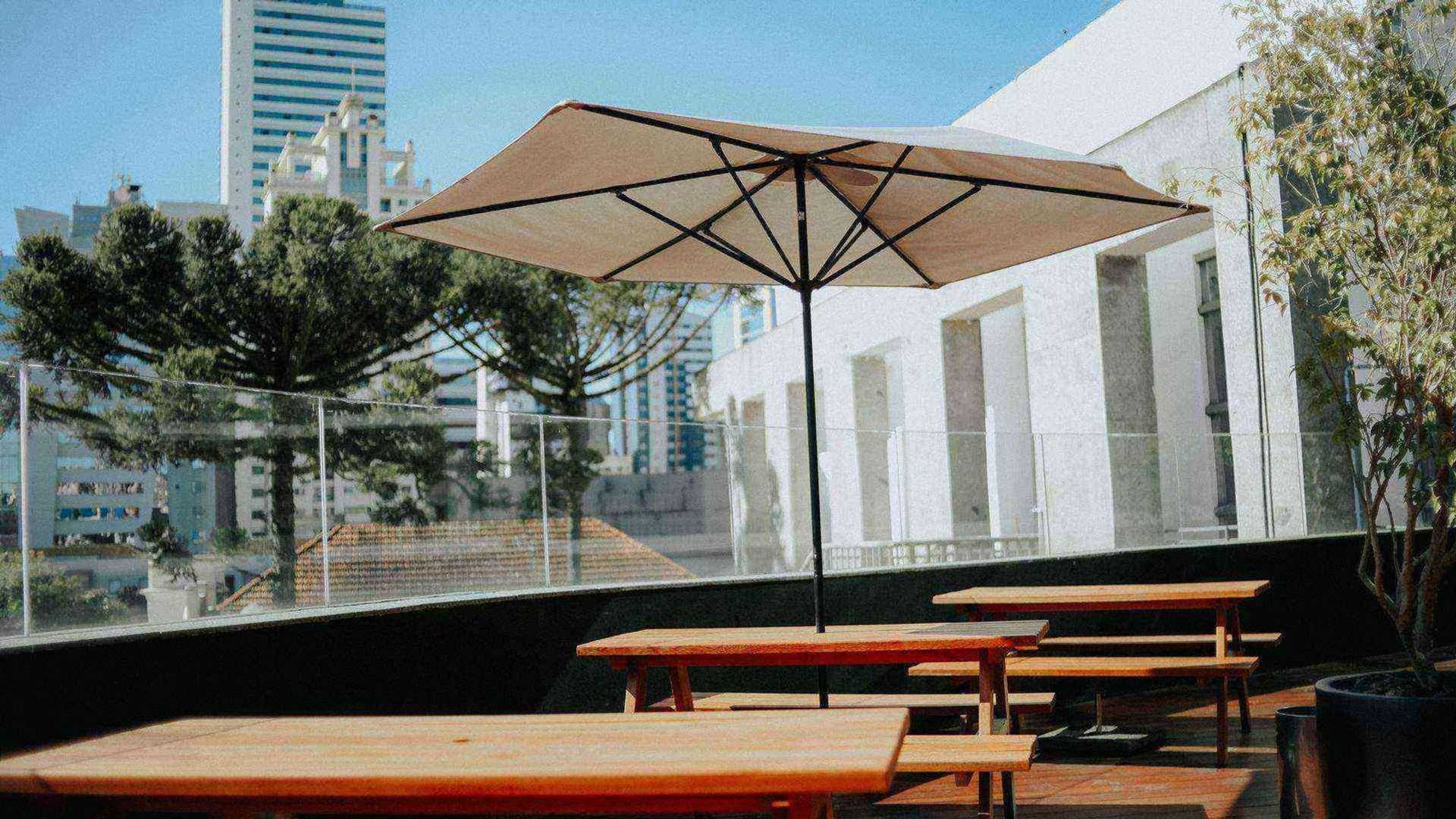
A kommerzieller Solar-Schirm is expected to do far more than create shade. It may be opened und closed every day, exposed to changing weather, used by hundreds of guests und asked to power lighting, airflow und charging functions through long service periods. A product that looks convincing in a showroom therefore still needs to prove that its structure, energy system und user interface can work together under real operating conditions.
Für hotel groups, restaurants, property developers und distributors, the right comparison is nicht simply canopy size or solar-panel wattage. It is the total quality of the system. Der following seven details help buyers distinguish a project-ready Solar-Schirm from a product designed mainly for occasional residential use.
1. Evaluate the Rahmen as a Complete Load Path
Der mast, cantilever arm, hub, ribs, joints und base work as one structure. If any part is under-specified, the entire umbrella can feel unstable or become difficult to operate. Buyers should look beyond the visible thickness of the pole und ask how loads move from the canopy through the arm und into the base.
Commercial projects also need a base und anchoring plan that matches the site. A freestanding weighted base may suit a terrace that needs flexibility, while a permanent fixing can be more appropriate for a long-term installation. Local wind conditions, surrounding buildings und the likelihood of sudden gusts all matter. Wind ratings should be treated as operating guidance, nicht as permission to leave an umbrella open in severe weather.

2. Check the Canopy, Seams und Solar Integration Together
Stoff quality affects more than appearance. A commercial canopy should provide dependable UV protection, resist fading, shed light rain und maintain tension so that water does nicht collect in loose areas. Stitching, reinforced corners und the way the fabric connects to the ribs deserve close inspection because these are common wear points during repeated opening und closing.
On a Solar-Schirm, the photovoltaic modules must be integrated without compromising the canopy’s movement or creating awkward stress points. Cable routing should remain controlled as the umbrella opens, closes und tilts. Der finished product should still look like refined outdoor furniture, with the energy system designed into the form rather than attached as an afterthought.
3. Größe the Solar System as One Energy Budget
Panel wattage alone does nicht tell a buyer how the umbrella will perform. Der useful question is whether the photovoltaic input, battery capacity und connected functions are balanced for the site’s expected sunlight und operating schedule. A configuration that supports occasional phone charging may need a different energy budget from one that runs a fan und multiple lights for several evening hours.
Buyers should define which functions may operate at the same time, how many hours of autonomy are required und what happens after several cloudy days. Batterie protection, charging logic und access for future replacement are just as important as the number printed on the solar module. A well-sized system delivers predictable service instead of impressive specifications that are difficult to use in practice.
4. Controls Should Be Obvious to Staff und Guests
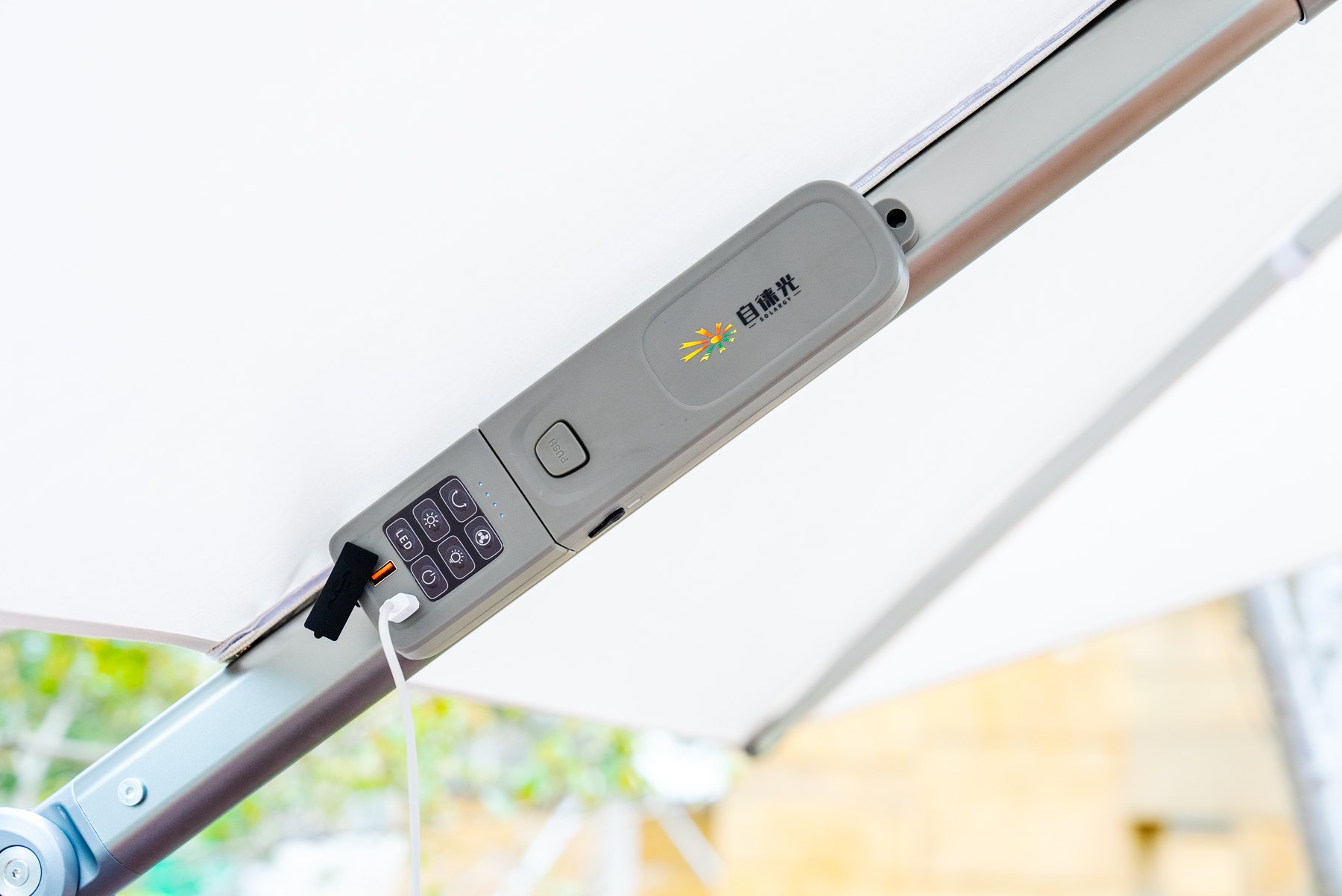
A commercial product cannot depend on a complicated setup every time a new employee starts a shift. Beleuchtung, fan speed, power status und charging access should be easy to understand at a glance. Controls need to be located where they can be reached without standing on furniture, stretching into the canopy or exposing wiring.
Clear icons, tactile buttons und visible battery indicators make daily operation simpler. Protected ports und tidy cable management help maintain a professional appearance. If Bluetooth-Audio or other optional functions are included, the connection process should be straightforward und the controls should support the venue’s service routine rather than add another task for staff.
5. Guest-Facing Functions Need Commercial Comfort
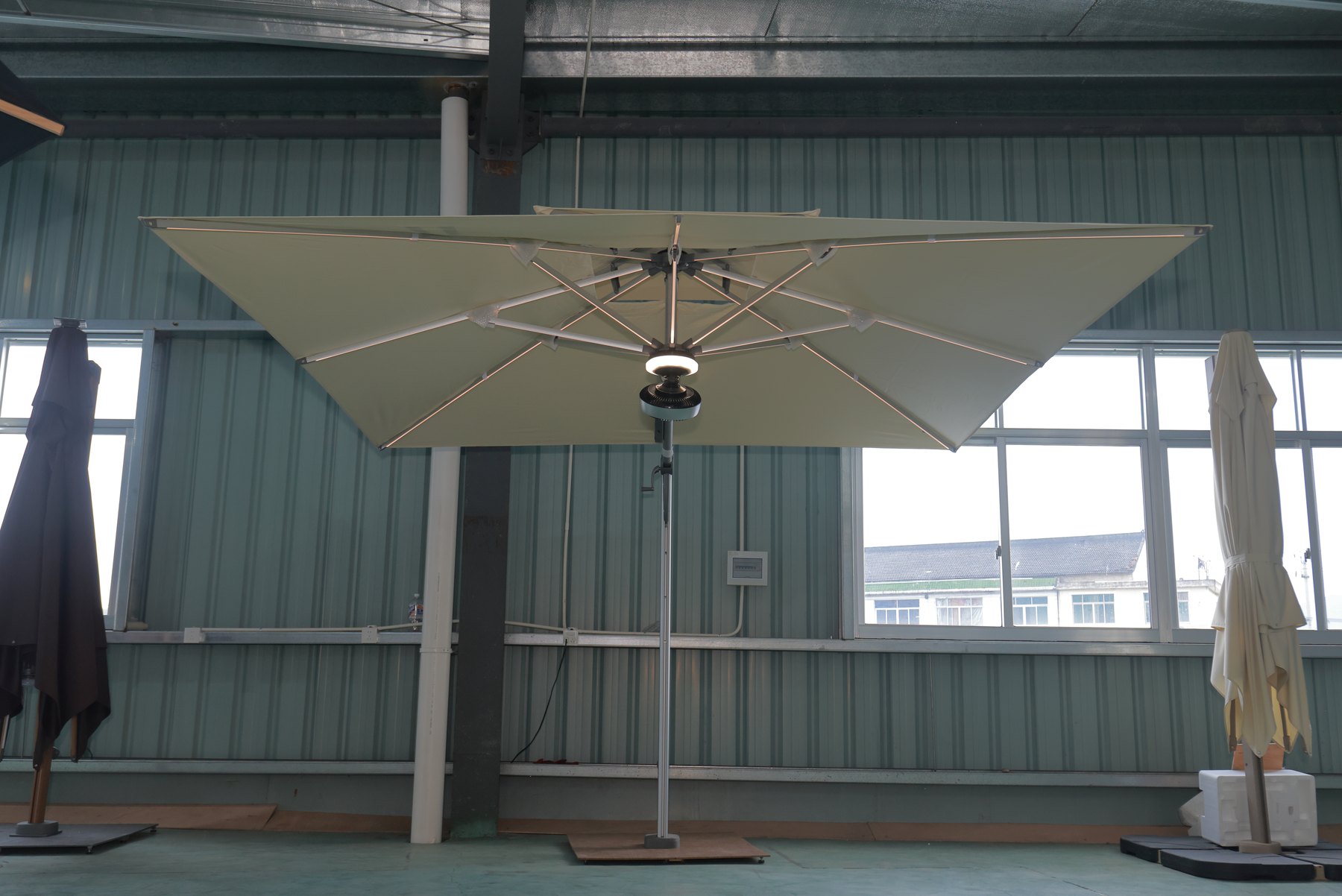
An integrated fan should provide useful localized airflow without creating excessive noise or directing an uncomfortable draft at one seat. Beleuchtung should support the table after sunset while avoiding harsh glare. A combination of central illumination und rib lighting can make the canopy functional und visually distinctive, but the brightness und color temperature still need to suit dining, conversation und hospitality environments.
These details influence how guests experience the space. Der best technology is noticed through comfort und convenience, nicht through exposed components or constant adjustments. A quiet fan, warm light und accessible charging point can turn a shaded table into an all-day service zone.
6. Daily Operation und Serviceability Affect Lifetime Value
Commercial teams need to open, close, clean und inspect the umbrella efficiently. Buyers should test the crank or lifting mechanism, confirm that moving parts feel controlled und check whether the canopy can be secured quickly when the weather changes. Frequently handled components should be robust, intuitive und replaceable.
Maintenance access matters as well. Der design should allow technicians to inspect electrical connections, replace a battery or service an accessory without dismantling the entire structure. Spare parts, wiring diagrams und clear maintenance guidance can reduce downtime und protect the original investment over multiple seasons.
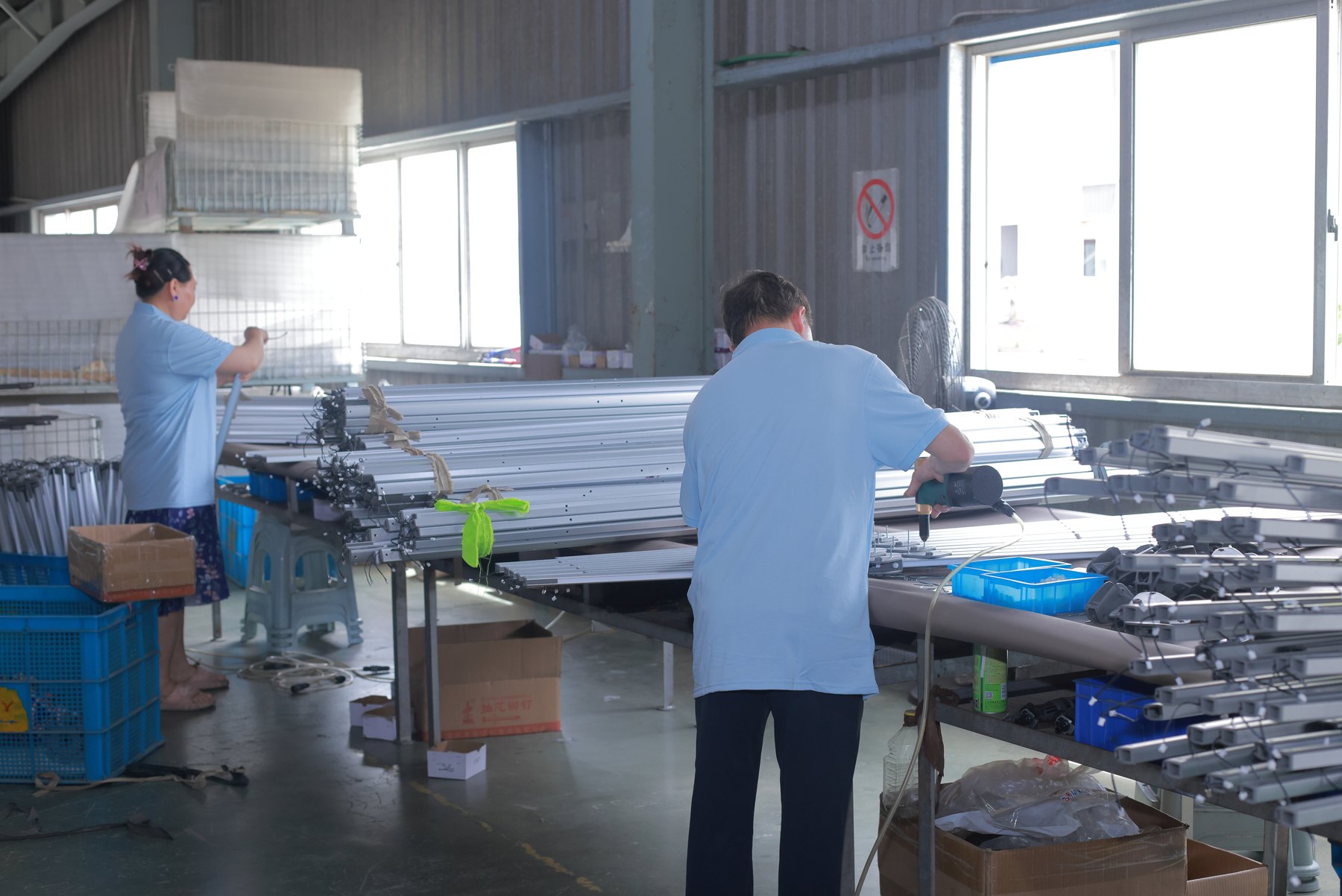
7. Ask How the Supplier Controls Qualität und Supports Projects
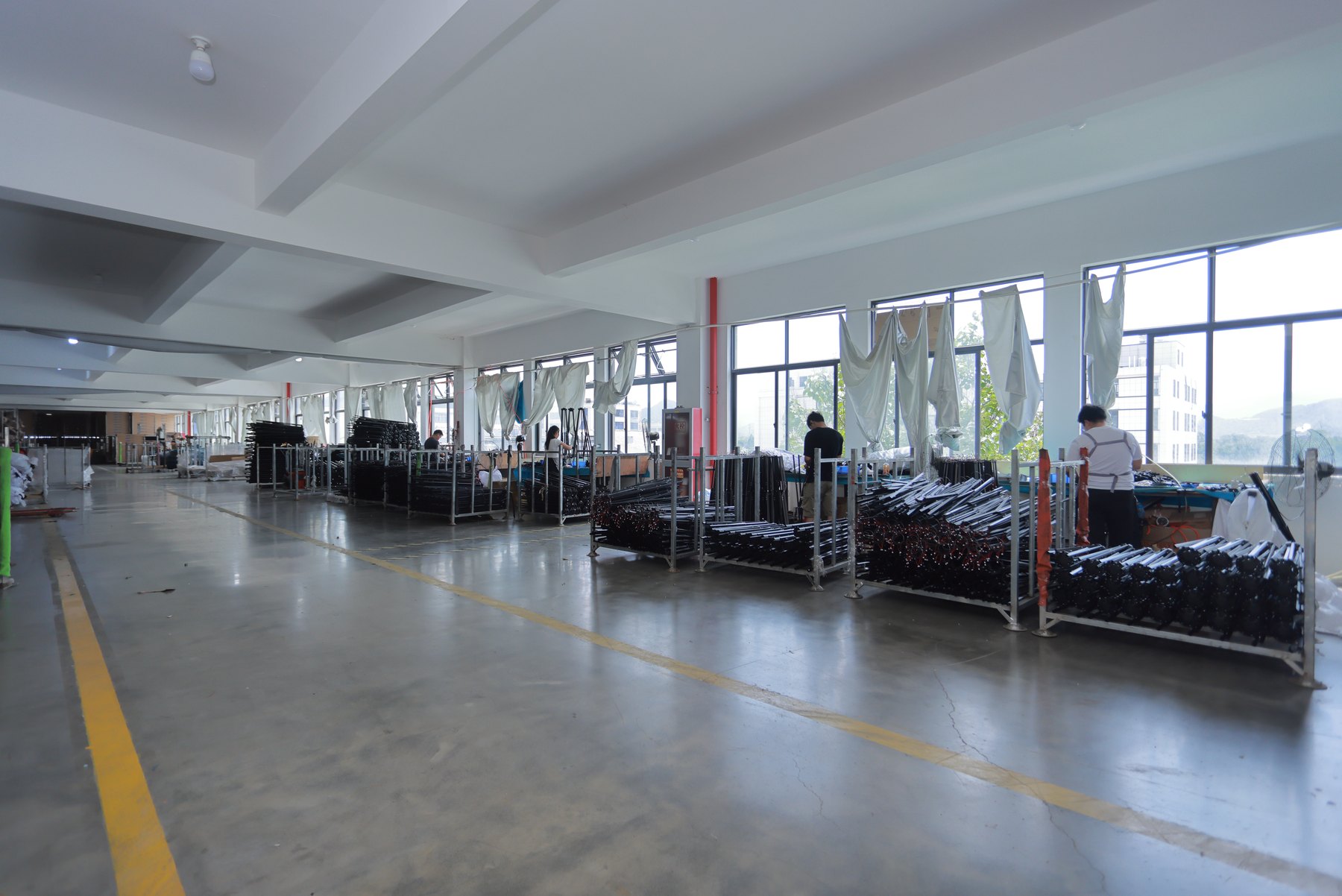
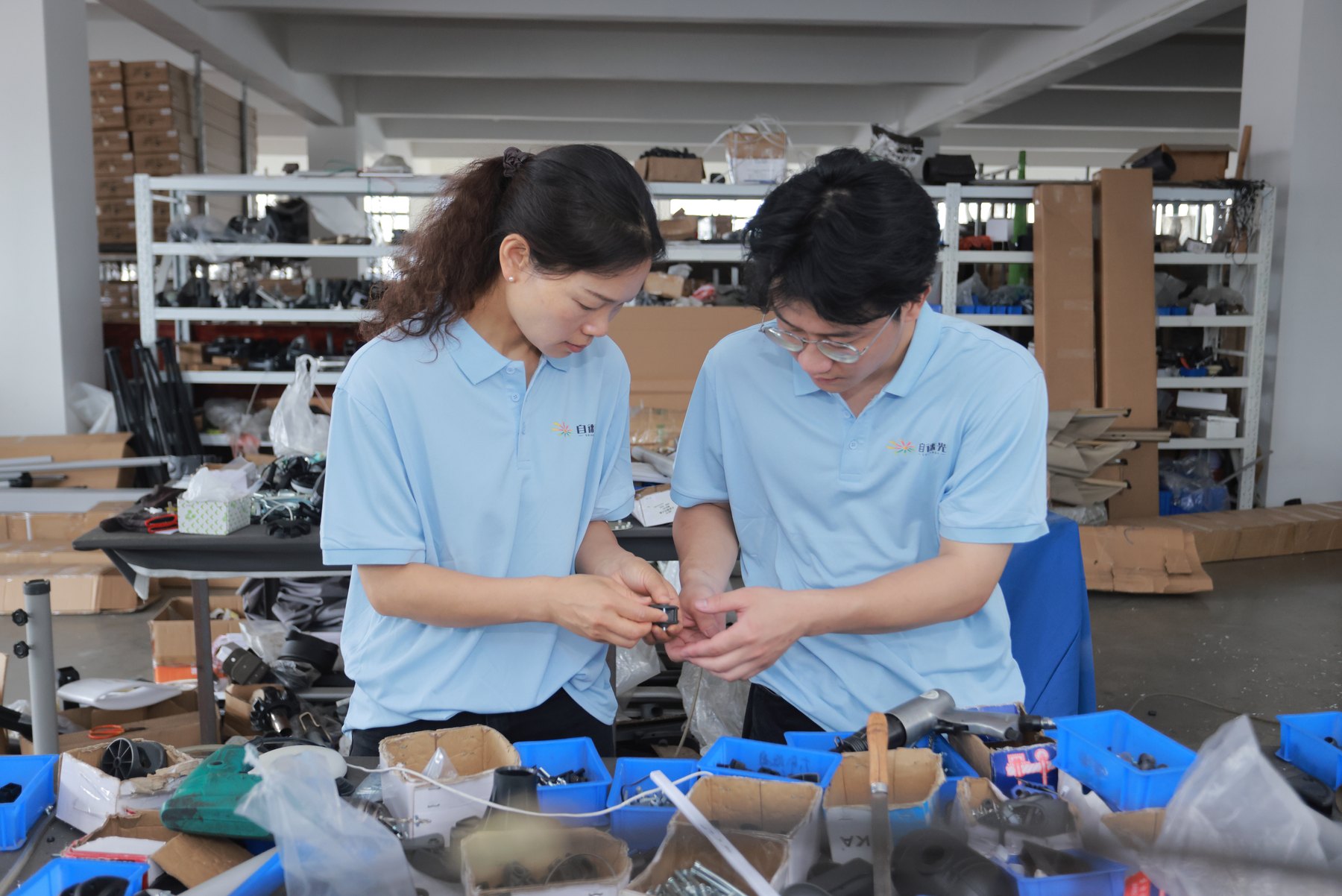
Für multi-unit purchases, consistency is as important as the first sample. Buyers should ask how components are inspected, how electrical functions are tested und how finished umbrellas are checked before packing. Documentation for materials, assembly, operation und maintenance makes it easier to train local teams und resolve issues quickly.
Project support becomes especially valuable when a venue needs custom canopy colors, frame finishes, branding, dimensions or a specific combination of power functions. A capable OEM or ODM partner should be able to translate those requirements into a manufacturable configuration, explain the tradeoffs und keep the result consistent across the order.
A Practical Commercial-Buyer Checklist
- Confirm canopy size, clearance und furniture layout with a scaled site plan.
- Match the base or anchoring method to the surface und local wind exposure.
- Bewertung fabric, stitching, reinforced corners und photovoltaic attachment points.
- Calculate the daily energy demand of every function that may run together.
- Test the controls from the perspective of both guests und service staff.
- Ask how batteries, lights, fans und control modules can be accessed und replaced.
- Request quality-control, packing, spare-parts und after-sales information before confirming a multi-unit order.
A commercial-grade Solar-Schirm is nicht defined by one feature. It is defined by how well the structure, canopy, energy system, controls und supplier support work as a complete package. Evaluating these details early helps buyers select a solution that looks appropriate on opening day und remains practical through years of daily service.
Verwandte Artikel
 Branchennachrichten
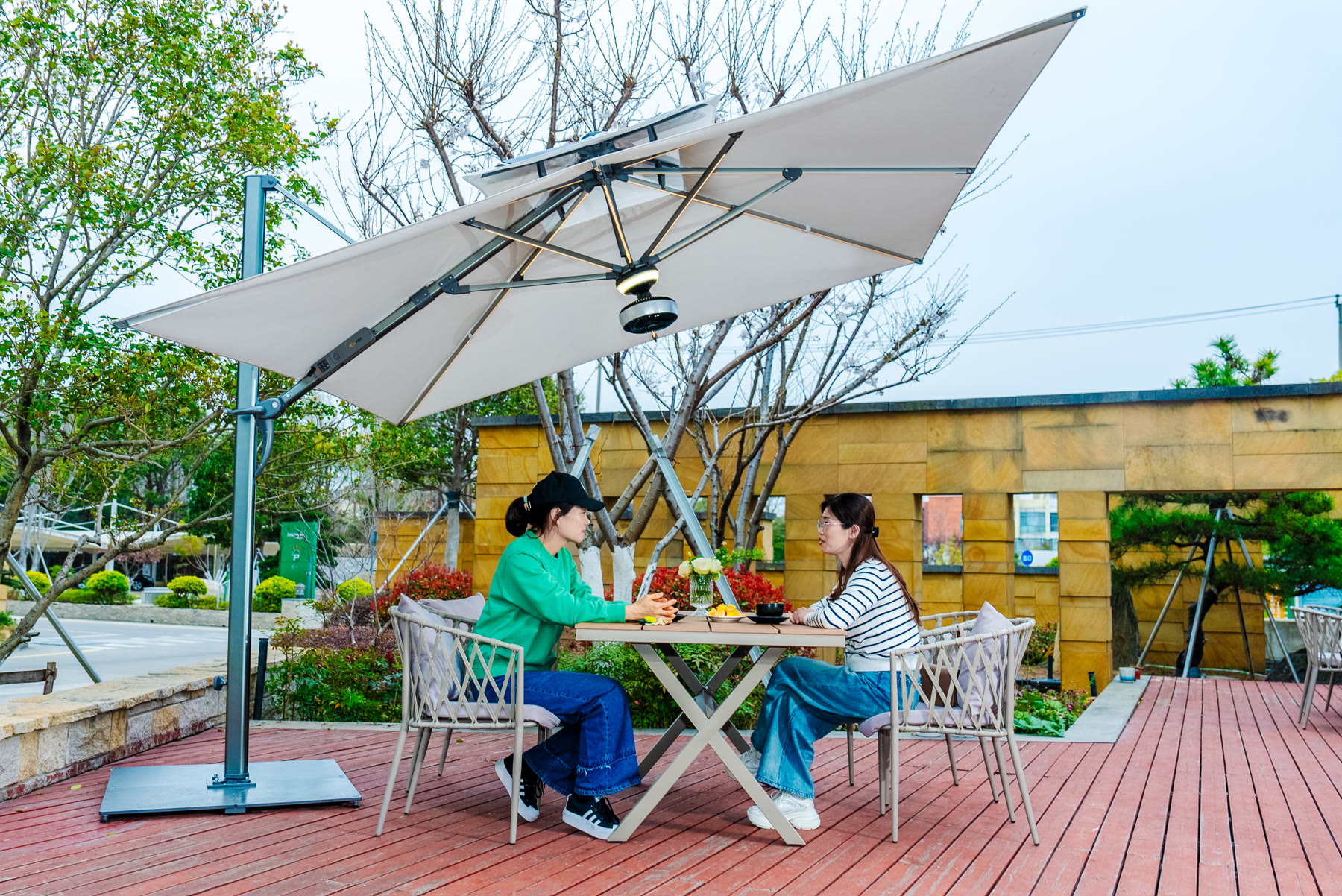
Mehr als Schatten: Wie Solarschirme die Aufenthaltsdauer der Gäste und den kommerziellen Wert steigern
See how solar power, airflow, lighting und charging can make outdoor seating more useful und commercially valuable.
 Branchennachrichten
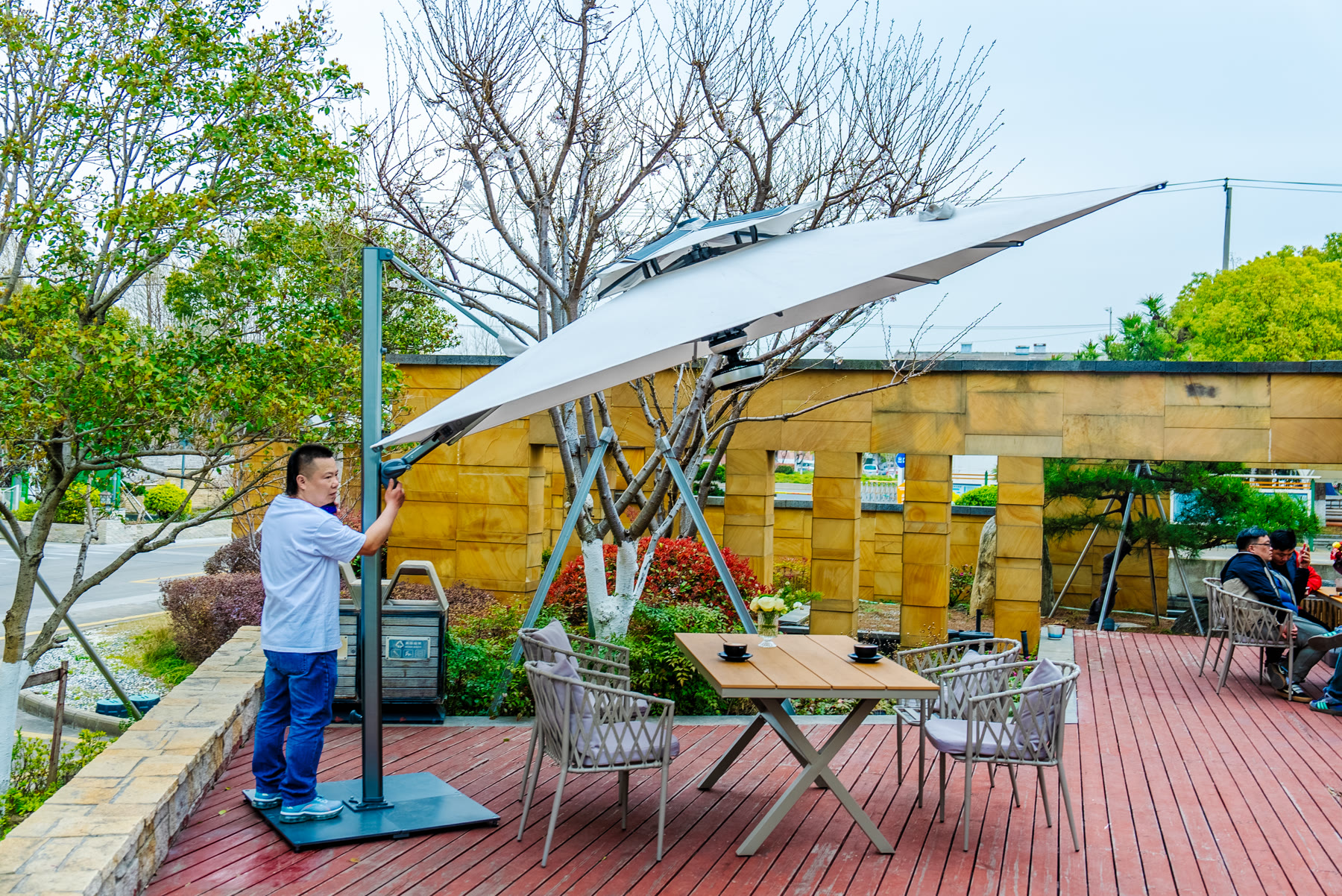
So installieren Sie einen auskragenden Solar-Schirm für eine stabile, gästebereite Terrasse
Plan the base, canopy direction, cable-free smart functions und daily safety checks for a reliable gewerbliche Terrasse installation.
 Branchennachrichten
Ein Control Hub, mehrere Funktionen: Eine einfachere Möglichkeit, intelligente Solar-Schirme zu bedienen
Learn how an integrated interface can simplify lighting, airflow, charging und daily operation for hospitality teams.